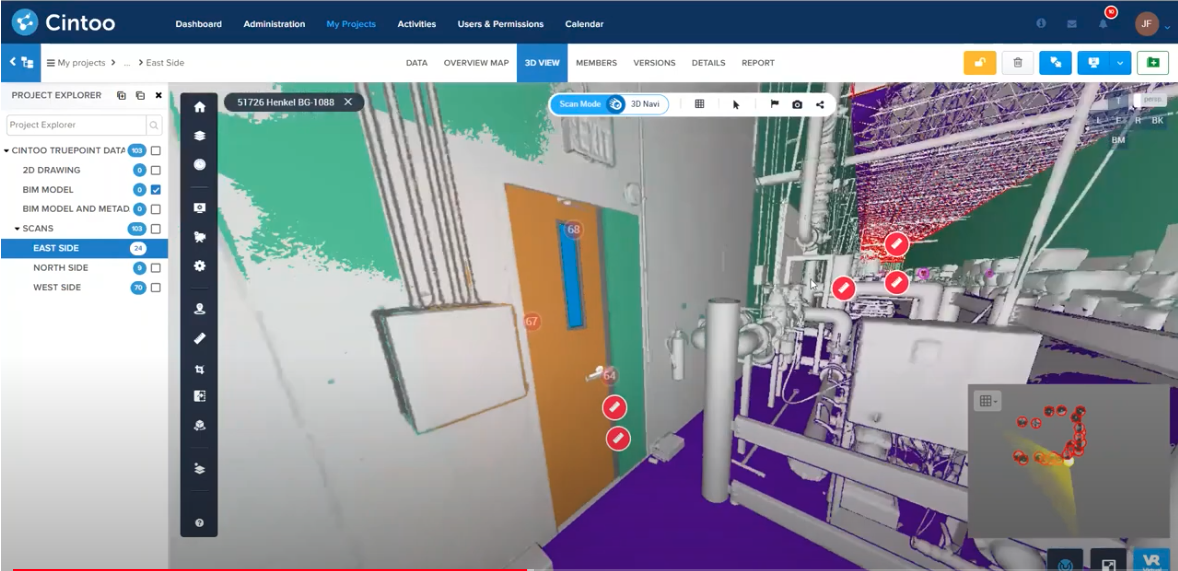
Rework on industrial projects often traces back to one place - the way your team handles scan data between capture and BIM modeling. When reality capture data sits unused or gets manually translated into design models, errors compound. Misaligned pipe runs, missed structural elements, and coordination conflicts show up during fabrication or installation, rather than during planning.
Cintoo converts complex scan data into high-fidelity 3D meshes that your team can act on before those errors reach the field. This article walks through the signs that your scan-to-BIM workflow is driving rework, so you can catch the breakdown early.
Key Takeaways: Signs Your Scan-to-BIM Workflow Is Causing Rework
- Repeated field clashes often point to disconnected scan data and BIM models that were never compared.
- Manual translation of point clouds into BIM introduces measurement errors that cascade directly through fabrication stages.
- Teams that skip as-built verification against their design models miss critical deviations before installation begins.
- Cintoo gives industrial teams browser-based access to high-fidelity 3D meshes for faster, more accurate coordination.
- Cloud collaboration on scan data reduces rework by keeping every project stakeholder aligned on current site conditions.
Warning Signs Your Scan-to-BIM Process Is Driving Rework
1. Field Clashes Keep Appearing After Coordination Reviews
If your coordination meetings consistently miss clashes that later surface on-site, the problem is likely your data rather than your process. Clashes often slip through when BIM coordination relies on design models that haven't been verified against actual site conditions.
Compare your BIM model directly with as-built data before locking in coordination decisions. Catching clashes early can help stay on budget and on schedule.
2. Your Team Only Views Scan Data on Specialized Workstations
When only one or two people in your organization can open and navigate scan files, you've created a bottleneck that delays every decision tied to as-built conditions. Project managers, engineers, and fabricators all need direct access to that data, not just the reality capture specialist who ran the scanner.
Move scan data to a cloud-based platform that streams high-resolution 3D meshes in a browser. Anyone on your team can then inspect, measure, and annotate site conditions without downloading multi-gigabyte files or requiring specialized desktop software on every workstation.
3. Design Models Are Built from Outdated or Incomplete Scans
If months pass between your last scan and the start of BIM modeling, your design is already based on conditions that may no longer exist. Equipment changes, structural modifications, and on-site adjustments all alter the as-built reality your models should reflect.
Treat scan data as a living reference rather than a one-time capture. Schedule regular scans tied to project milestones and upload them to a centralized platform. Your modeling team then works from the most current dataset, reducing the gap between design intent and field reality..webp?width=803&height=496&name=Group%2016315%20(3).webp)
4. No One Compares the BIM Model to As-Built Conditions Before Fabrication
Skipping the as-built verification step before fabrication is one of the most direct causes of rework. Pipes that don't fit, structural connections that conflict with existing elements, and MEP routing that collides with already-installed equipment all result from this gap in your workflow.
Use a visual difference tool to overlay your BIM model onto the scanned as-built data. Cintoo helps your team identify deviations between models and as-installed conditions before anything ships to the site, turning a reactive process into a proactive check.
5. Coordination Happens Over Screenshots Instead of Shared 3D Environments
Screenshots and PDF markups strip away the spatial context that makes coordination effective. When your team discusses clashes or routing changes on flat images, critical depth, elevation, and orientation details get lost between the capture and the decision.
Replace static markups by sharing the actual project space with your full team. Platforms that let multiple members navigate, annotate, and discuss issues inside a 3D environment reduce miscommunication. This kind of shared spatial understanding keeps coordination grounded in verified, repeatable data rather than approximations.
6. Scan Data Sits in Silos Across Multiple Departments
When engineering, construction, and operations each maintain their own copies of scan files on local drives, version control disappears. One team works from a dataset captured six months ago while another references a recent rescan, and neither realizes the discrepancy until a field conflict arises.
Centralize all scan data in a unified platform, such as Cintoo, storing high-fidelity 3D meshes in one accessible location so every stakeholder references the same as-built baseline, regardless of department, time zone, or office location.
7. You Discover Rework Causes Only After the Project Is Complete
If your team only investigates rework at project closeout, you're collecting lessons learned too late to affect the current build. Tracking when and why rework occurs in real time lets you identify which workflow breakdowns have been detrimental.
Tag issues directly in your 3D project environment as they arise. Linking each issue to a specific location in the scanned dataset builds a traceable record that informs future projects, strengthens your QA/QC process, and helps you quantify rework triggers.
8. Subcontractors Lack Access to Current As-Built Data
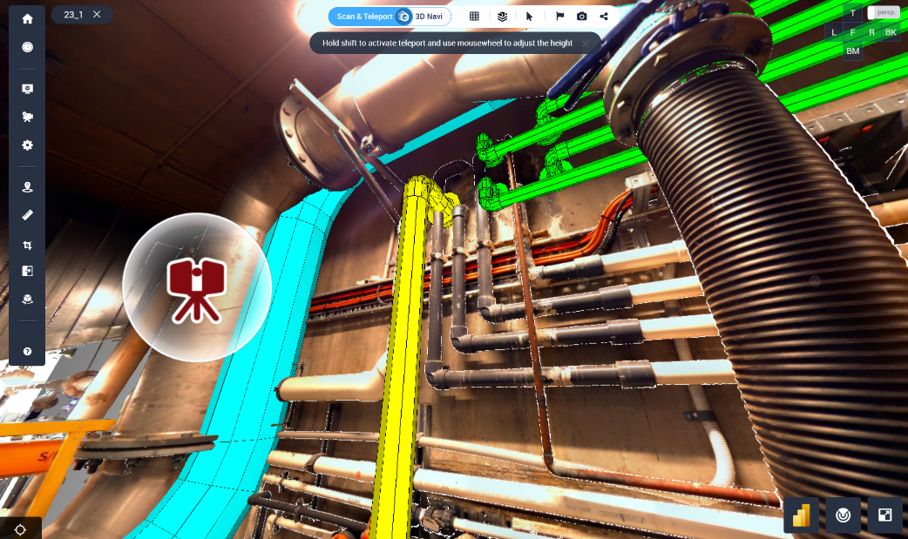
Subcontractors who arrive on-site with outdated or incomplete information about existing conditions are set up for rework from the start. If your scan-to-BIM workflow doesn't extend data access beyond your internal team, field crews fabricate and install based on assumptions rather than verified conditions.
Grant subcontractors access to the same as-built data as your internal team uses. With Cintoo's unlimited user model, you can share verified site conditions with every trade partner involved in the project, removing the information gap.
How to Fix Your Scan-to-BIM Workflow Before Rework Adds Up
Each warning sign in this list points to a common root cause: a gap between the reality captured by your scanners and the information your team uses to make decisions. Closing that gap means making scan data accessible, current, and comparable to your design models at every stage of the project.
Cintoo gives industrial teams a single cloud platform to manage, share, and act on reality capture data at scale. From as-built verification to BIM coordination, the Cintoo platform connects your 3D scan data directly to the workflows where rework starts, so your team can stop it before it reaches the field.
Schedule a discovery call to see how your team can reduce rework with verified data from every scan.



.png?width=48&height=48&name=sensors%20(1).png)
.png?width=65&height=50&name=sensors%20(2).png)


.png?width=69&height=50&name=cloud_done%20(1).png)


.png?width=42&height=49&name=Group%2015496%20(2).png)


.png?width=60&height=60&name=calendar%20(1).png)


.png?width=48&height=45&name=image%20175%20(1).png)