







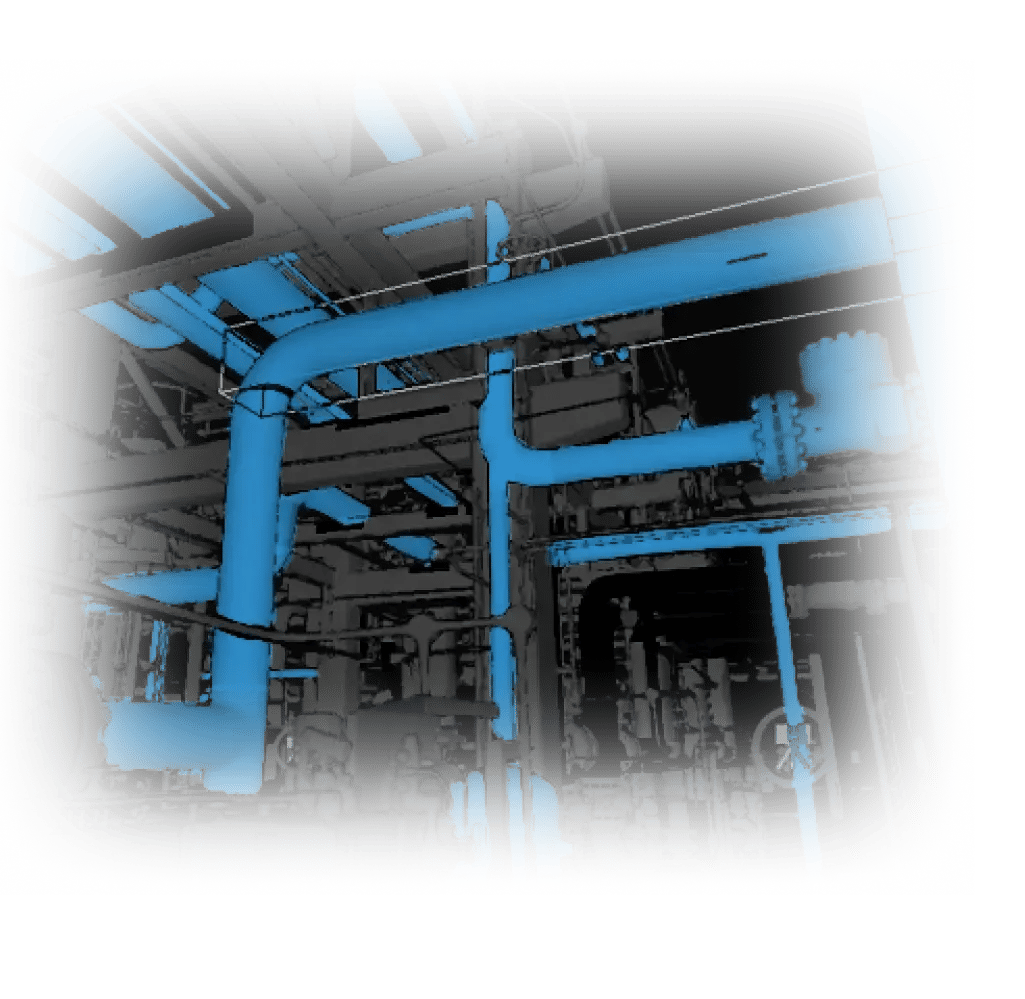
From pipes and basins to pumps and electrical systems, dense, interconnected infrastructure makes it hard to access, inspect and accurately assess the true condition of water and wastewater assets.
Many water utilities run on aging infrastructure with incomplete documentation spread across disconnected information systems, leaving teams without a reliable picture of as-built conditions.
.webp?width=786&height=324&name=Group%2015686%20(4).webp)
Refurbishment and maintenance must happen in 24-7 environments with zero tolerance for interrupting operations or safety incidents, turning every inspection and site visit into a risk.
.webp?width=786&height=320&name=Group%2015686%20(5).webp)
Bring your laser scan data and BIM/CAD models into a central, cloud-based platform, where teams can view, validate and inspect plants. Rely on this single source of truth to reduce rework and late change orders, lower construction risk to minimize disruption to plant operations, and improve safety during works.
.webp?width=1127&height=593&name=Group%2016269%20(4).webp)
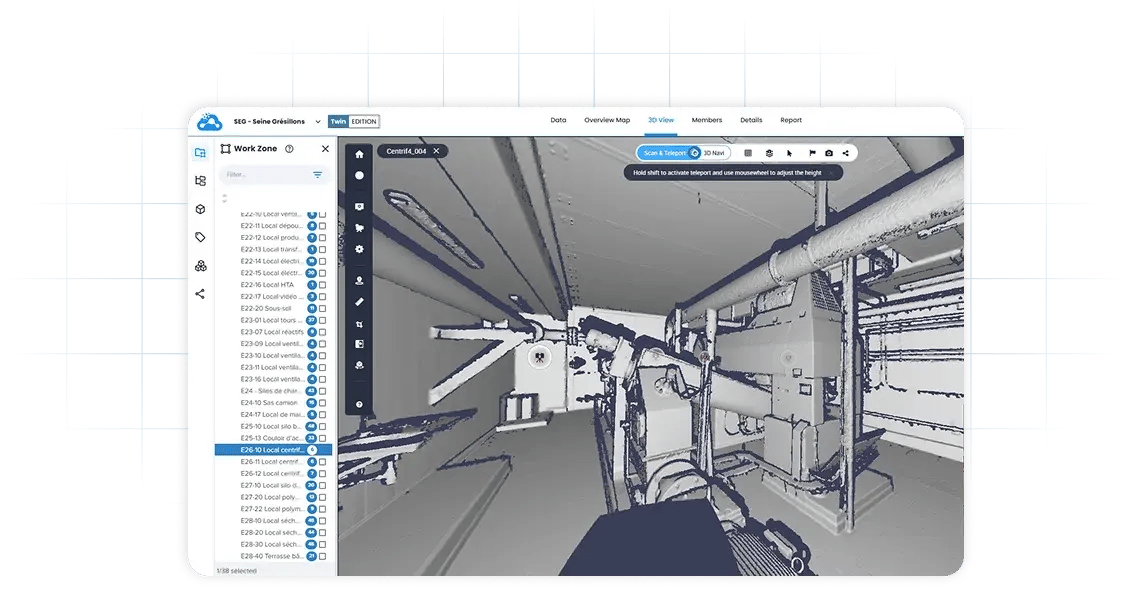
Capture confined and hazardous areas and let unlimited users explore these remotely, without the need for a site visit. Engineers, operators and contractors work from the same reality data, coordinating upgrades, renovations and maintenance without interrupting round-the-clock operations.
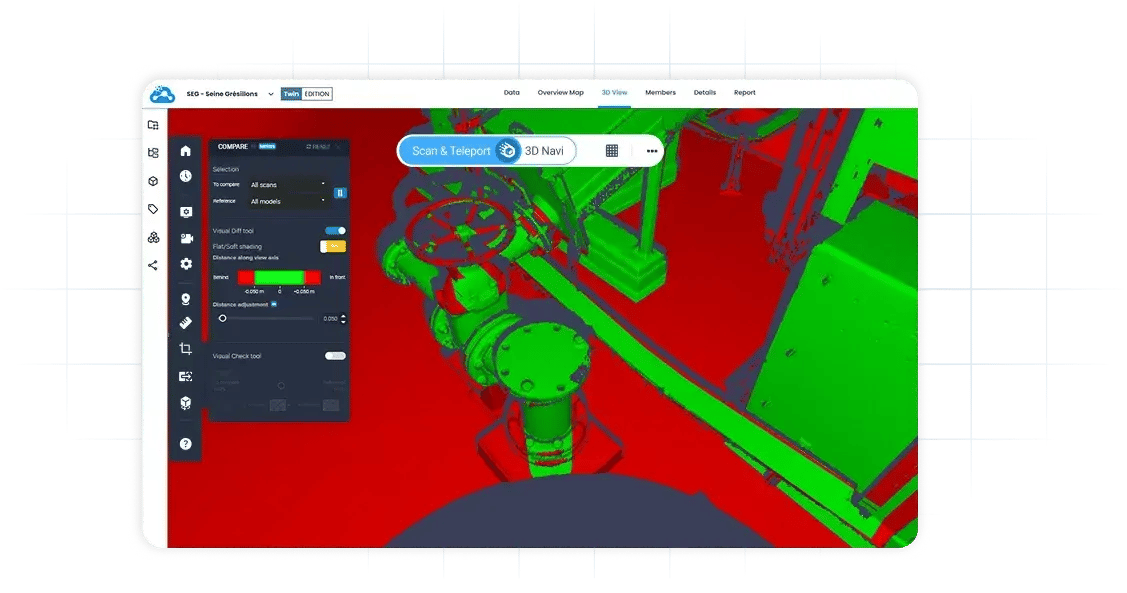
Maintain a living digital twin of your plant well beyond the first scan. Compare data over time to monitor aging pipes, basins and structures, catch deterioration early and plan interventions before failures disrupt operations – all supported by AI-driven asset tagging and classification.

Centralize laser scans, BIM models, and asset information to support facility modernization, retrofit planning and maintenance.

Establish a connected digital twin environment to improve maintenance, remote collaboration, and infrastructure visibility.
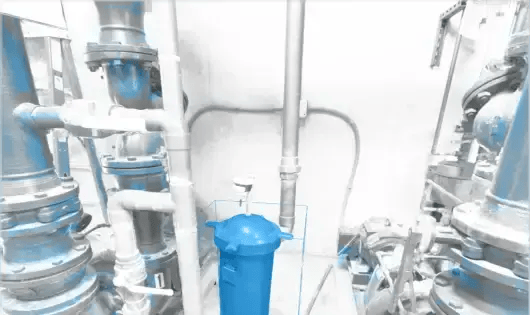
Validate layouts, track facility changes, compare models against existing conditions, and support digital factory initiatives through connected, browser-based workflows.
.webp?width=524&height=310&name=automotive%20(2).webp)