The Next Evolution of Digital Twins is Collaborative
Reality capture has transformed how industrial facilities, infrastructure and construction projects, and complex assets are documented. High-fidelity laser scans and digital twins now provide teams with unprecedented visibility into real-world conditions. But while the quality of captured data has advanced dramatically and is streamable in 3D environments, the way teams collaborate around that data has remained surprisingly fragmented.
Most organizations still review scan data through screenshots, screen sharing sessions, static markups, email threads, or isolated walkthroughs. Teams interpret environments independently, often forming different understandings of the same physical conditions. The result is familiar across industries: coordination delays, planning errors, RFIs, safety risks, and costly site revisits. The solution required to alleviate these challenges needs to incorporate real, collaborative spatial understanding where teams can be present in the same environment, looking at the same conditions simultaneously.
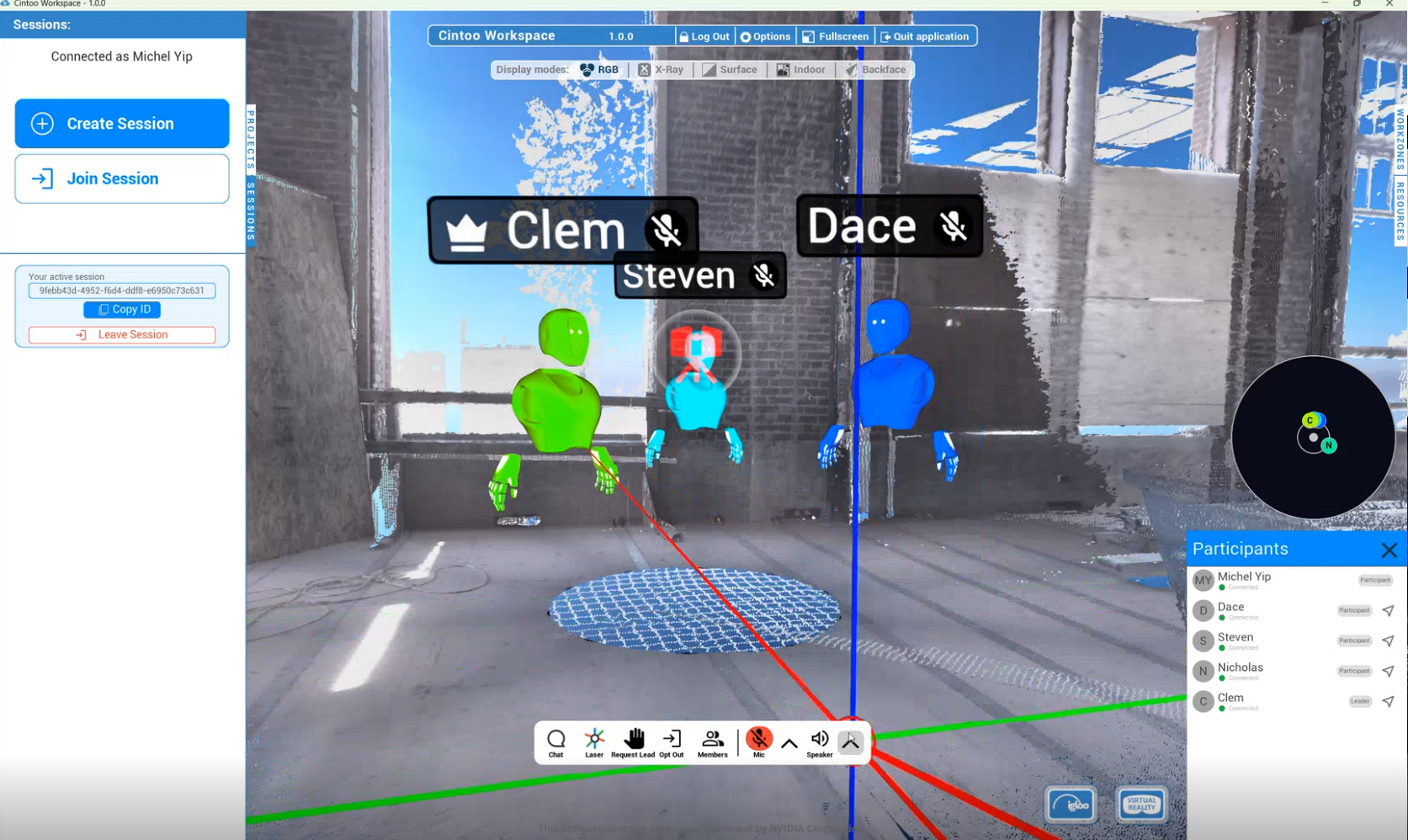
The newly released Cintoo Workspace provides this for reality capture workflows: not visualization but shared spatial understanding.
Instead of simply viewing point clouds, teams can now meet together inside high-fidelity environments, collaborate in real time, and make decisions within the actual spatial context of the facility.
The Shift From Reviewing Data to Collaborating Inside Immersive Reality
For years, digital twin technology focused primarily on access to information. Could teams remotely open scan data? Could they navigate large facilities? Could stakeholders visualize existing conditions before traveling onsite?
Those capabilities were important first steps. But they still centered around individual experiences with shared files.
Cintoo Workspace introduces a fundamentally different model: synchronous, spatial collaboration.
Multiple participants can join the same session simultaneously, navigate together, discuss issues live within the environment, and align around what actually exists in the field.
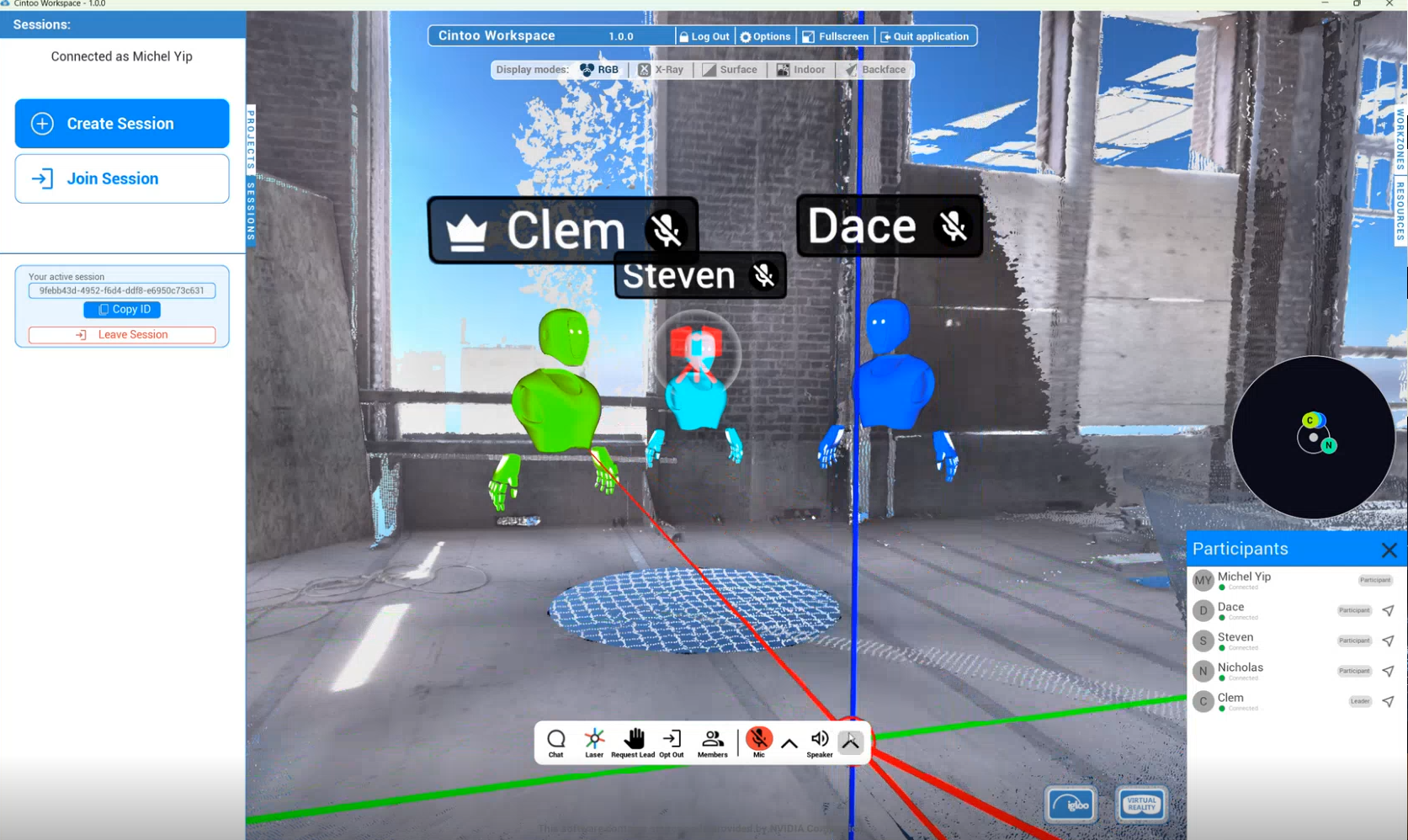
This changes the role of reality capture from a static reference into a collaborative, operational workspace.
Imagine a project review involving engineering, construction, operations, and maintenance teams across multiple geographies. Traditionally, that process might require several disconnected meetings, screenshots, annotated PDFs, and eventual site visits to resolve uncertainties.
With Cintoo Workspace, those stakeholders can enter the same scan-based environment together. One participant can lead navigation while others follow. Teams inspect clearances, review installation sequencing, validate existing conditions, and discuss issues in real spatial context, audibly and virtually connected. Decisions happen during the session rather than after weeks of asynchronous interpretation.
The result is not just faster communication, but a more accurate shared understanding of complex environments.
Why Spatial Understanding Matters
When teams review data independently, each person builds their own mental model of the space. Small differences in interpretation can compound into major downstream issues.
This is where Cintoo Workspace creates meaningful operational value.
By allowing stakeholders to collaborate directly within engineering-grade scan data, the platform reduces ambiguity and aligns teams around the same physical reality.
Instead of asking:
- “Is there enough clearance?”
- “Where exactly is the obstruction?”
- “How difficult will access be?”
- “Can maintenance safely reach this area?”
Teams can evaluate those questions together in context.
This capability becomes especially important in everyday work. To show project conditions, most stakeholders will jump on a call and simply use MS Teams or a similar application to video share for the sake of “collaboration”. However, while it is real-time, the method suffers since sharing a streamed video is usually a choppy experience at one frame per second. The output is sometimes ambiguous, lagged, and futile to real-time collaboration. The experience for decision-makers on the call can equally be unhelpful and somewhat stalled.
With Cintoo Workspace, true, high-fidelity collaboration is the ultimate solution. It doesn’t require a shared screen. Instead, Workspace is all about sharing the actual project space with others in real-time, so everything is identifiable, accurate, and easy to understand.
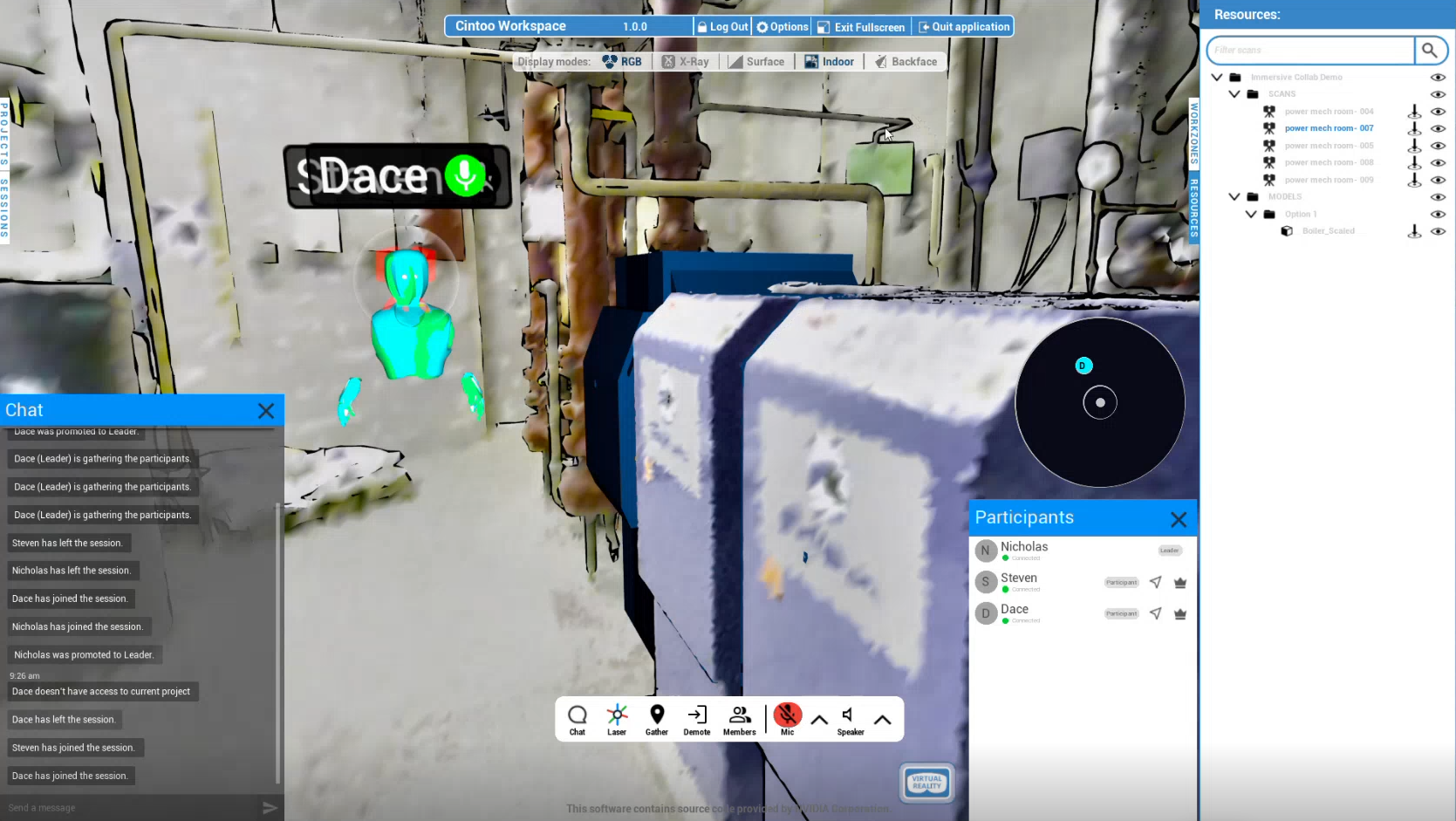
This collaborative spatial understanding becomes especially important in industries where errors carry significant cost. A misunderstood condition can lead to redesigns, change orders, delayed schedules, safety incidents, or unplanned field work.
Cintoo Workspace helps organizations identify those issues earlier before they become operational problems.
Built for Real Facilities, Not Just Visualization
Many collaboration platforms exist today, but most were not designed for industrial-scale reality capture workflows.
Cintoo Workspace is purpose-built for this complexity by streaming 3D scan data in immersive technology. Cintoo Workspace supports mixed participation models, allowing immersed and desktop users to collaborate in the same session simultaneously.
The platform streams high-fidelity reality capture data while supporting both desktop and immersive participation. Teams can collaborate using standard desktop hardware or optionally join through VR systems and immersive environments.
That flexibility matters because enterprise collaboration environments are rarely uniform. Some participants may work from offices with traditional desktop setups, while others may operate from immersive visualization rooms or from within XR headsets.
Importantly, the experience remains desktop-first and hardware agnostic, making adoption practical for distributed global teams rather than limiting collaboration to specialized visualization labs.
This lowers the barrier to entry for organizations looking to operationalize reality capture at scale.
A New Layer in the Digital Twin Ecosystem
Cintoo Workspace is not intended to replace existing digital twin workflows. Instead, it extends them.
Organizations already using the Cintoo Web App for asynchronous collaboration can continue leveraging familiar capabilities such as:
Workspace adds a new synchronous collaboration layer on top of those workflows.
Users can now:
-
Meet together inside environments
-
Lead and follow navigation sessions
-
Conduct collaborative walkthroughs
-
Use voice and text communication
-
Review facilities at true-to-scale spatial fidelity
This integration between asynchronous and synchronous workflows is significant because real-world collaboration rarely happens in a single mode.
Some tasks require independent review and documentation. Others require real-time alignment and rapid decision-making. Cintoo Workspace bridges those collaboration models within the same reality capture ecosystem.
Beyond Visualization: Operational Impact
The value of shared spatial collaboration extends far beyond “better viewing.”
Organizations adopting collaborative digital twin workflows increasingly focus on measurable operational outcomes:
-
Faster project reviews
-
Reduced travel and site visits
-
Improved stakeholder alignment
-
Earlier issue detection
-
Increased safety
-
Greater decision-making confidence
In industries managing aging infrastructure or complex brownfield environments, those benefits can scale rapidly across capital projects and ongoing operations.
As industrial workforces become increasingly distributed, the ability to collaborate spatially rather than simply sharing screens becomes a major competitive advantage.
The Future of Collaborative Reality Capture
Reality capture is evolving beyond documentation.
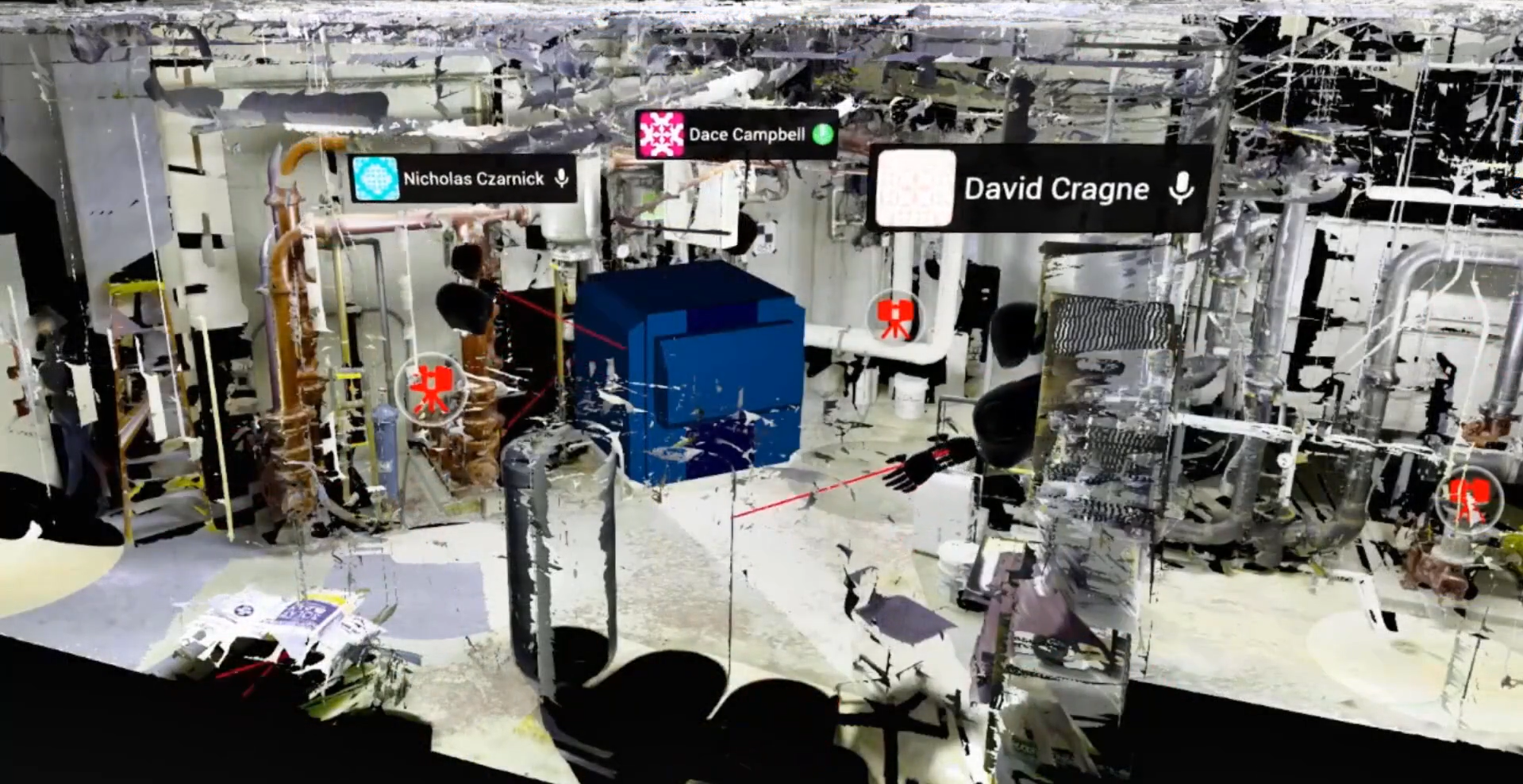
The next phase of digital twin technology is about creating environments where teams can think, review, and solve problems together inside spatially accurate representations of the real world.
Cintoo Workspace represents an important step toward that future.
The platform combines high-fidelity scan streaming, real-time multi-user collaboration, optional immersive participation, and engineering-focused workflows into a unified environment designed specifically for industrial facilities.
More importantly, it changes how organizations use reality data.
That shift has the potential to fundamentally change how distributed teams work together across architecture, engineering, construction, operations, manufacturing, infrastructure, and energy sectors.
Experience Cintoo Workspace Today!
Cintoo Workspace is designed for organizations looking to move beyond static visualization and toward true collaborative reality capture workflows.
Download Cintoo Workspace below and collaborate in real-time through your 3D scan data.



.png?width=48&height=48&name=sensors%20(1).png)
.png?width=65&height=50&name=sensors%20(2).png)


.png?width=69&height=50&name=cloud_done%20(1).png)


.png?width=42&height=49&name=Group%2015496%20(2).png)


.png?width=60&height=60&name=calendar%20(1).png)


.png?width=48&height=45&name=image%20175%20(1).png)