For industrial organizations managing large, complex, and distributed assets, traditional approaches to reality capture can be expensive, slow to scale, and difficult to deploy everywhere. Laser scanning remains essential for precision work, but using it as the default for every site, room, or inspection may not be necessary and even may lessen a return on investment overall.
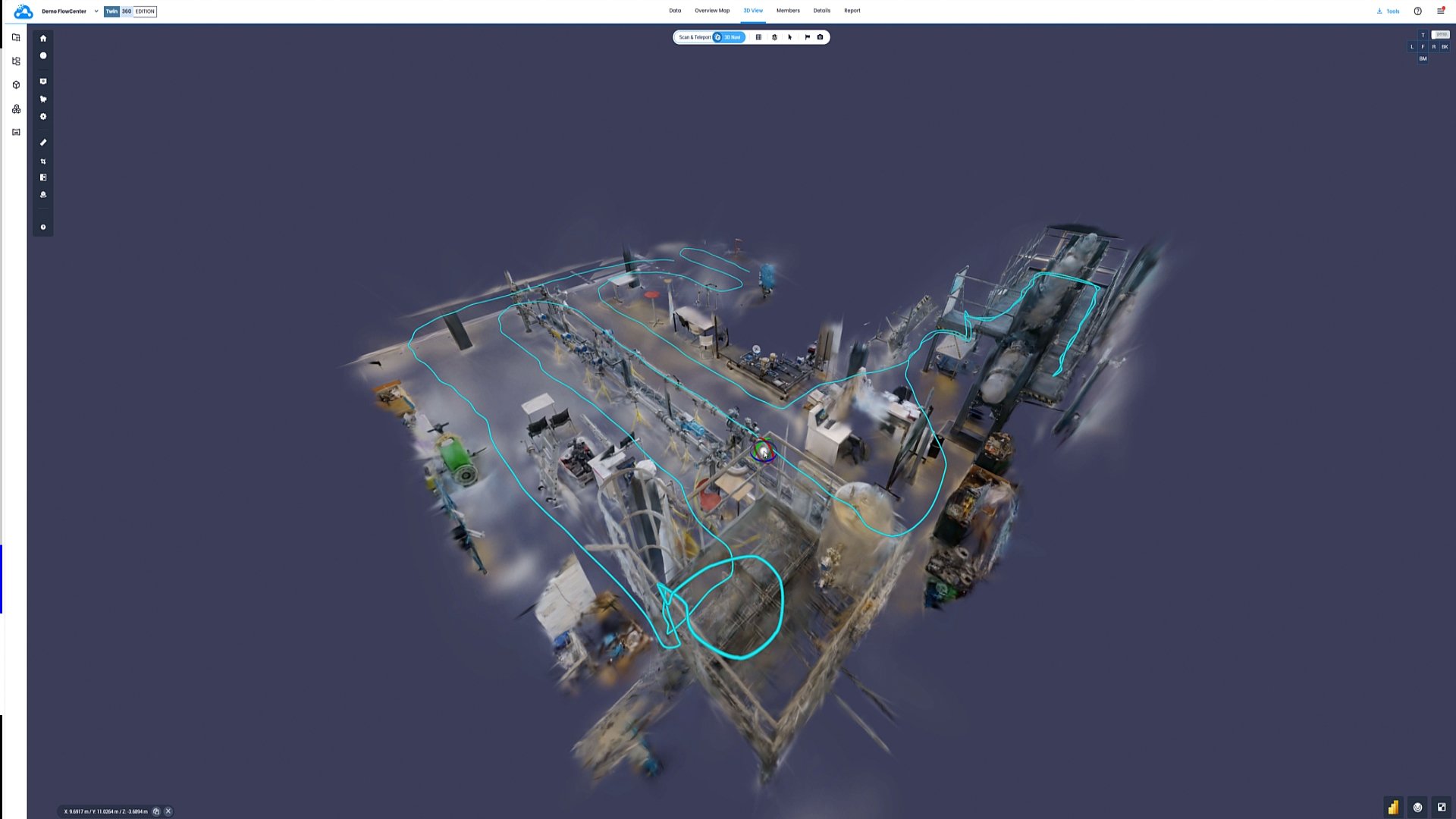
That’s why more teams are shifting toward 360 + 3D workflows. By combining lightweight 360 capture with existing 3D scans and models, organizations can dramatically reduce capture costs, accelerate time to insight, and scale reality capture across more sites without sacrificing spatial context. A 360 approach is for those areas within a project site that don't need the full gambit of precision-based laser scanning. This is exactly the value proposition behind the new 360 Edition, in partnership with Ricoh.
The ROI Challenge with Traditional Reality Capture
Laser scanning delivers high accuracy, but it comes with tradeoffs:
Difficulty scaling across dozens or hundreds of sites with sprawling geographies.
In industrial environments such as energy, utilities, manufacturing, and process facilities, not every use case requires full‑density scans. Visual inspections, safety checks, asset documentation, and early assessments often need context, not millimeter accuracy.
When laser scanning is overused, reality capture can become more of a cost driver than a value driver.
Why 360 Capture Changes the ROI Equation
360 capture flips that model. Lightweight cameras like the Ricoh THETA X allow teams to document environments quickly, with minimal training and far lower operational cost. The capture takes minutes and can be performed by non‑specialists.
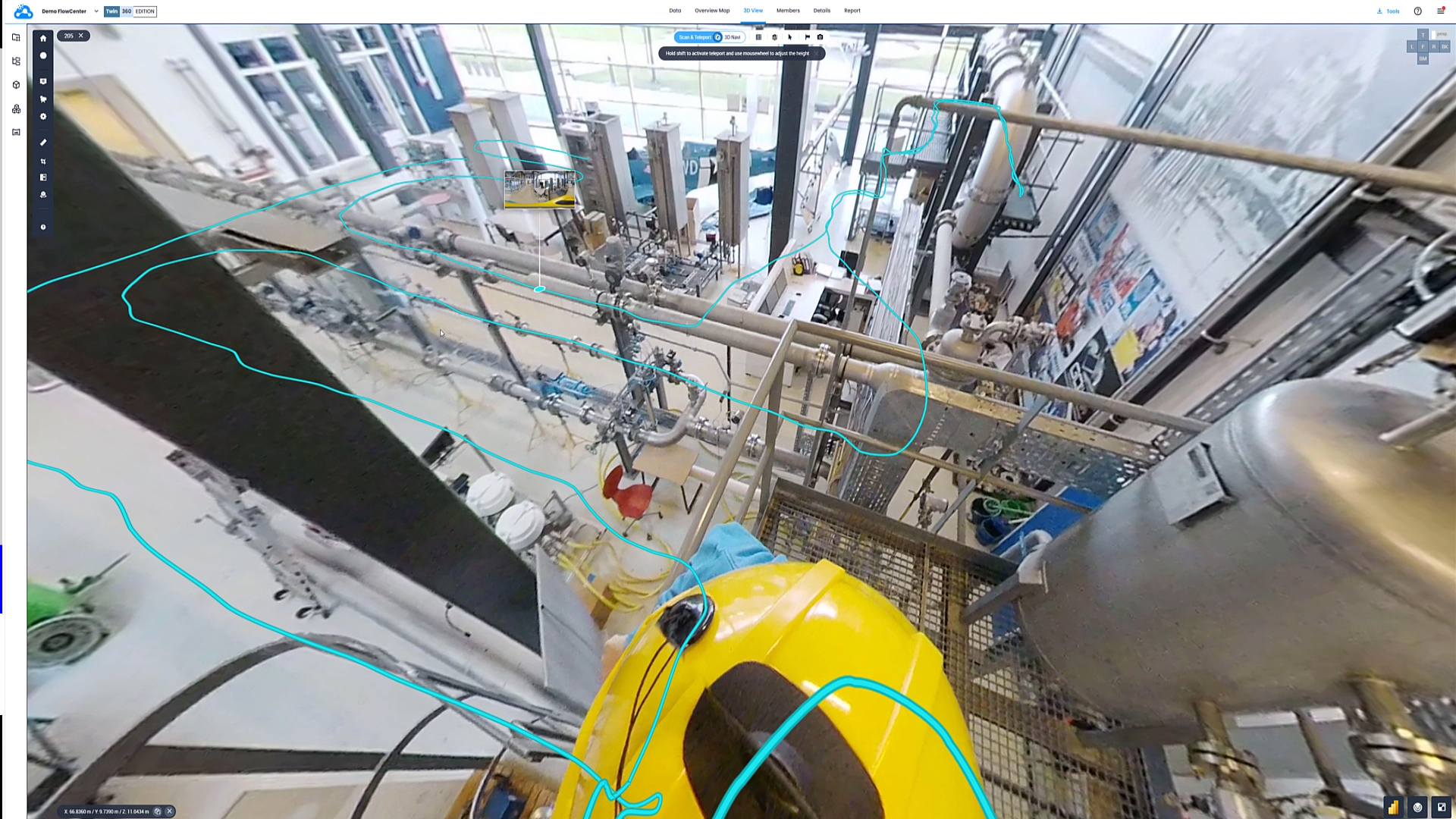
On its own, 360 imagery has limitations. But when it is aligned directly inside a true 3D environment, it becomes just as high-fidelity and actionable.
Cintoo’s 360 Edition brings Ricoh‑native 360 videos directly into the same synchronized 3D space as scans and BIM models, eliminating split screens, disconnected viewers, and duplicated workflows while leveraging the power of Gaussian Splatting to maintain the high quality of visualization.
Where ROI Is Won: 360 Inside 3D
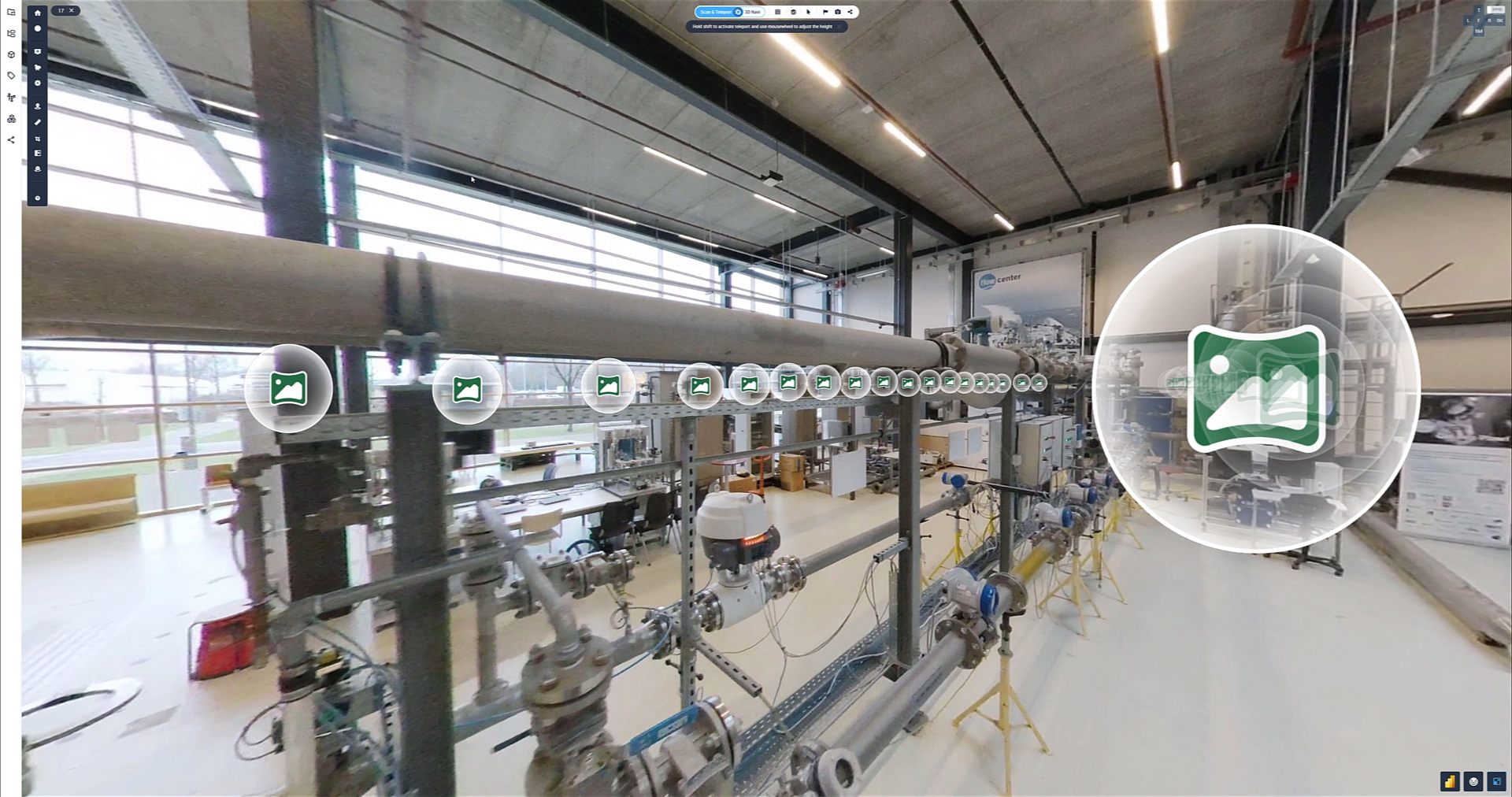
The key ROI driver is not 360 capture only, but rather the move to 360 inside 3D.
Unlike tools that force users to switch between viewers, Cintoo integrates 360 videos, laser scans, and models into a single unified 3D workspace. This means:
-
Faster understanding of site conditions
-
Less time onboarding stakeholders
-
Fewer site visits
-
Better communication between technical and non‑technical teams
Because 360 data behaves like any other dataset in Cintoo, teams use the same measurements, annotations, navigation, and sharing tools they already rely on, maximizing reuse and minimizing training costs.
End‑to‑End Workflow That Reduces Cost and Time to Value
The 360 Edition is designed to reduce friction at every step of the workflow:
Capture
Automated Upload
Alignment in 3D
Immediate Use
-
Once aligned, teams can navigate, measure, annotate, compare, and securely share the 360 + 3D site without feature limitations.
This automation dramatically shortens the path from capture to insight, improving ROI from day one. John Brown, Head of Reality Capture at General Motors who became an early adopter of the 360 Edition said, "Our laser scanning has become surgical - we can go in and know exactly what we need to capture, and do it quickly and efficiently."
Gaussian Splatting: High‑Fidelity Visualization Without Heavy Data
Another ROI driver is performance. The 360 Edition leverages Gaussian splatting to deliver smooth, high‑fidelity visualization from lightweight 360 data.
This approach enables:
-
Better visual clarity at lower data density
-
Faster loading and navigation
-
Reduced processing overhead
For large industrial sites and multi‑site portfolios, this means teams can visualize more data, more often, without the infrastructure burden typically associated with dense 3D datasets.
Complementing, Not Replacing, Laser Scanning
A critical ROI advantage of the 360 Edition is that it does not replace existing reality capture investments.
Laser scanning remains essential for:
The 360 Edition complements these workflows by covering the many scenarios where full scanning is unnecessary. Teams can prioritize scanning only where accuracy is required, while using 360 capture to maintain broad, up‑to‑date visibility across assets.
This selective approach lowers total capture cost while increasing overall coverage.
Why Industrial and Multi‑Site Teams Benefit Most
The strongest ROI gains come from Industry 4.0 environments:
-
Energy and utilities
-
Oil & gas
-
Manufacturing and automotive
-
Factories, plants, and large brownfield sites
These environments are geographically distributed and operationally complex. Capturing everything with laser scanning is impractical (think of a utilities closet for instance - sometimes you don't need to fully scan that setting) but missing context leads to delays, rework, and safety risks.
The 360 Edition is optimized for these scenarios, enabling scalable reality capture across multiple sites with a single, unified platform.
Lower Barrier to Adoption, Broader Value
Another ROI advantage is accessibility. The 360 Edition lowers the barrier to participation:
-
Field staff capture 360 videos
-
Project managers align data
-
Engineers and inspectors consume insights
This democratization of reality capture expands value beyond specialized teams and ensures more stakeholders can benefit from up‑to‑date site context.
Turning Reality Capture into a Value Engine
Ultimately, ROI comes from using the right tool for the right job.
Cintoo’s 360 Edition enables organizations to:
By combining lightweight 360 capture with high‑fidelity 3D visualization in one cloud‑native, multimodal platform, industrial teams can turn reality capture into a strategy more than a must-do, a strategy that optimizes for low-cost capture while maintaining fidelity.
To sum up: there's a lot of ROI potential with a 360 + 3D workflow. Watch our latest product video!



.png?width=48&height=48&name=sensors%20(1).png)
.png?width=65&height=50&name=sensors%20(2).png)


.png?width=69&height=50&name=cloud_done%20(1).png)


.png?width=42&height=49&name=Group%2015496%20(2).png)


.png?width=60&height=60&name=calendar%20(1).png)


.png?width=48&height=45&name=image%20175%20(1).png)