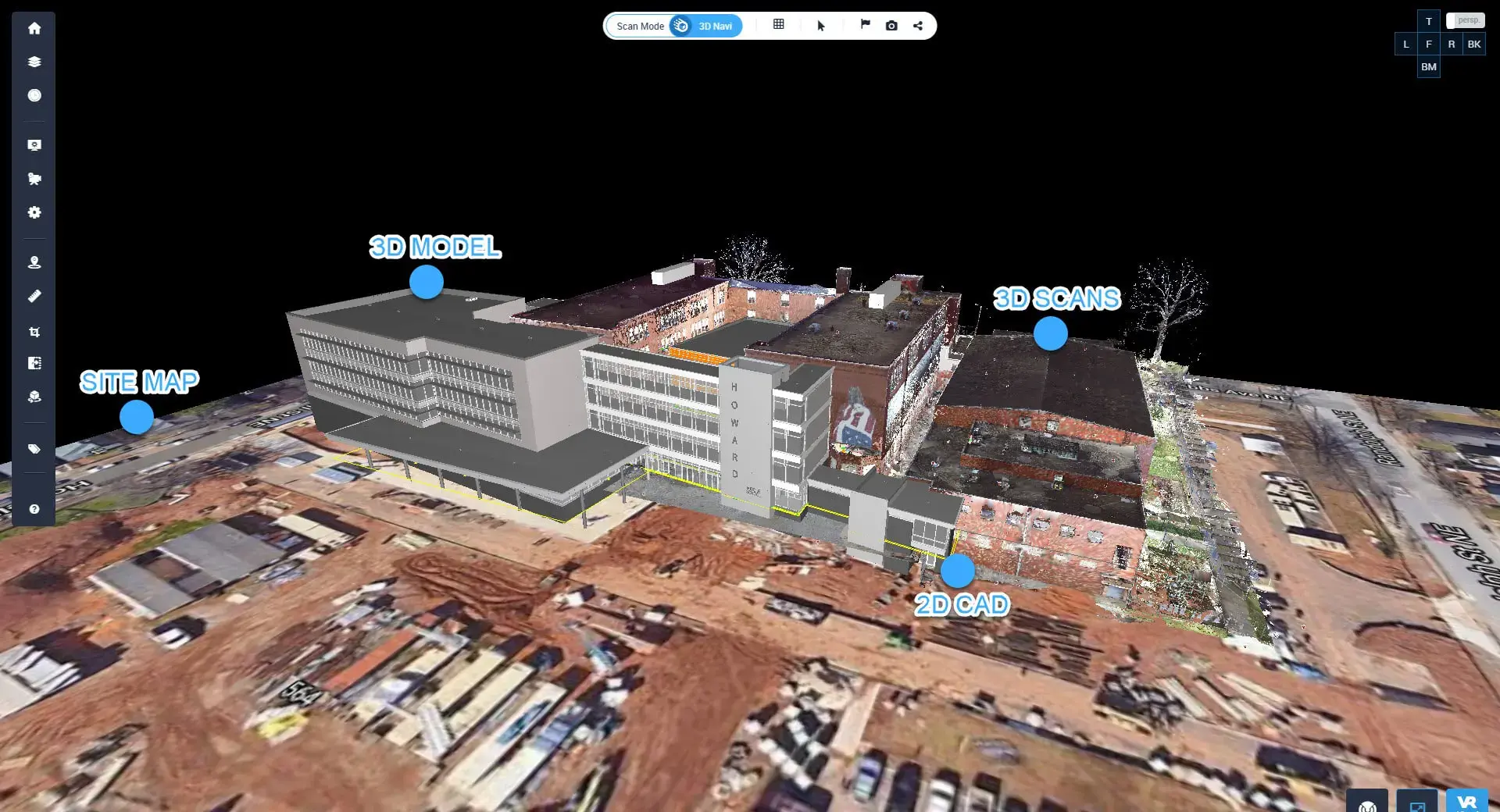
For large architecture, engineering and construction (AEC) organizations, digitalization has become an imperative in order to operate at scale. As portfolios grow across hundreds of assets, thousands of scans, and dozens of distributed teams, the question is how to do it in a way that also secures data and delivers measurable operational value. The cloud is where the answer lives.
This article looks at how using reality capture data in the cloud reshapes enterprise operations, and why it matters for stakeholders responsible for delivery, cost, and long-term asset value.
The enterprise data problem: capture is easy, leveraging it is hard
Reality capture has become widely used; terrestrial and mobile laser scanners, 360 cameras, and drones document a site down to millimeter accuracy. However, the challenge for enterprise AEC firms is how to manage, share, and use the enormous datasets that these produce.
A single large project can generate thousands of scans and billions of points. Stored locally, the data is trapped. It's siloed on workstations, duplicated across drives, inaccessible to remote teams, and impossible to compare against design models without specialist software and hardware. At enterprise scale, this friction multiplies across every project and every office.
Cloud digitalization solves this by turning static, heavy capture data into a living, accessible resource.
 Key cloud digitalization benefits for enterprise operations
1. A single source of truth for as-built data
When reality capture data lives in the cloud, every stakeholder, from project managers to remote BIM coordinators to facility owners, works from the same trustworthy dataset. Platforms like Cintoo convert massive point clouds into lightweight, mesh-based quality data that streams in a standard web browser so teams don't need high-end workstations or local copies to view and interrogate a site. One version of the truth that's available to everyone, from anywhere.
2. Faster, better informed decisions
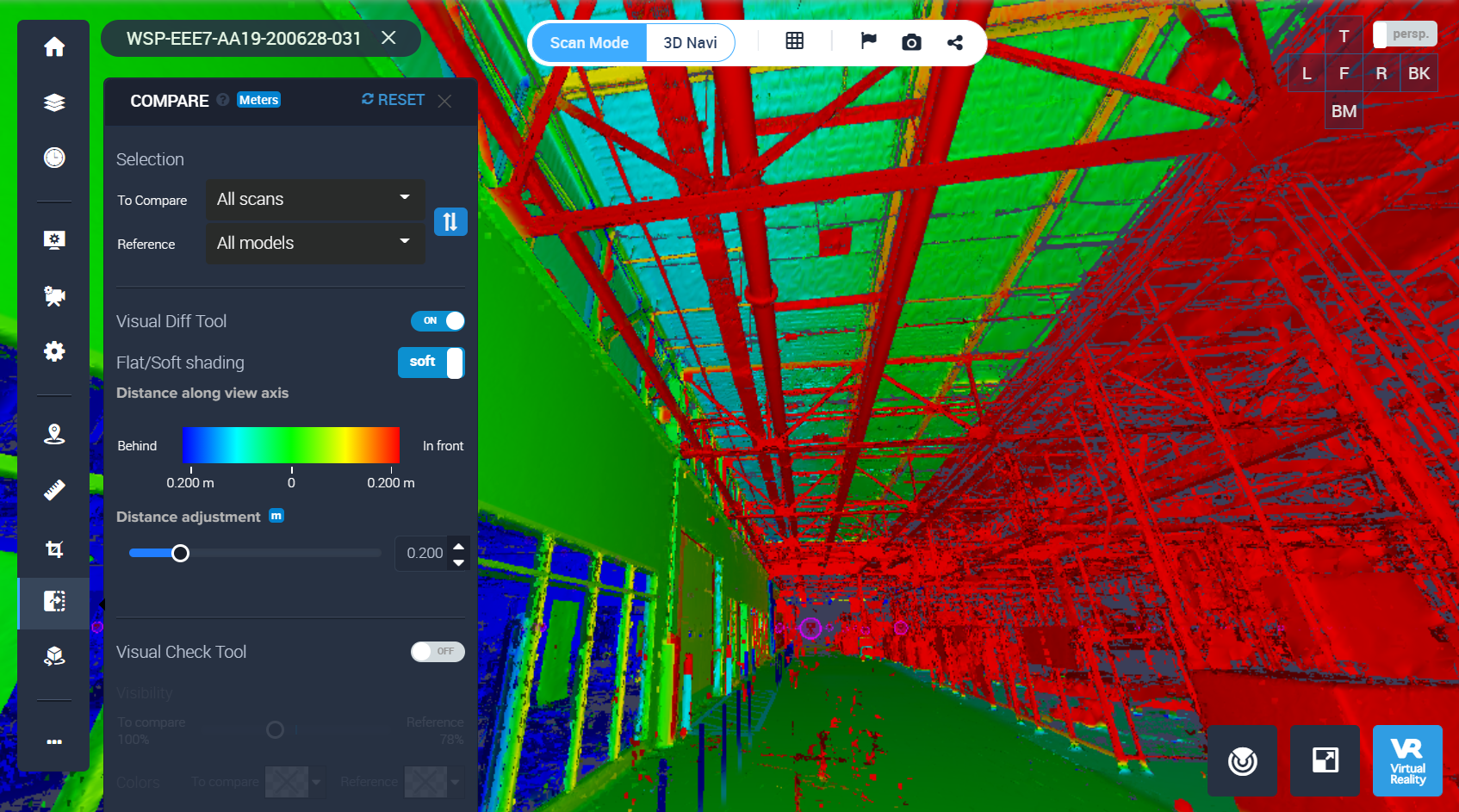
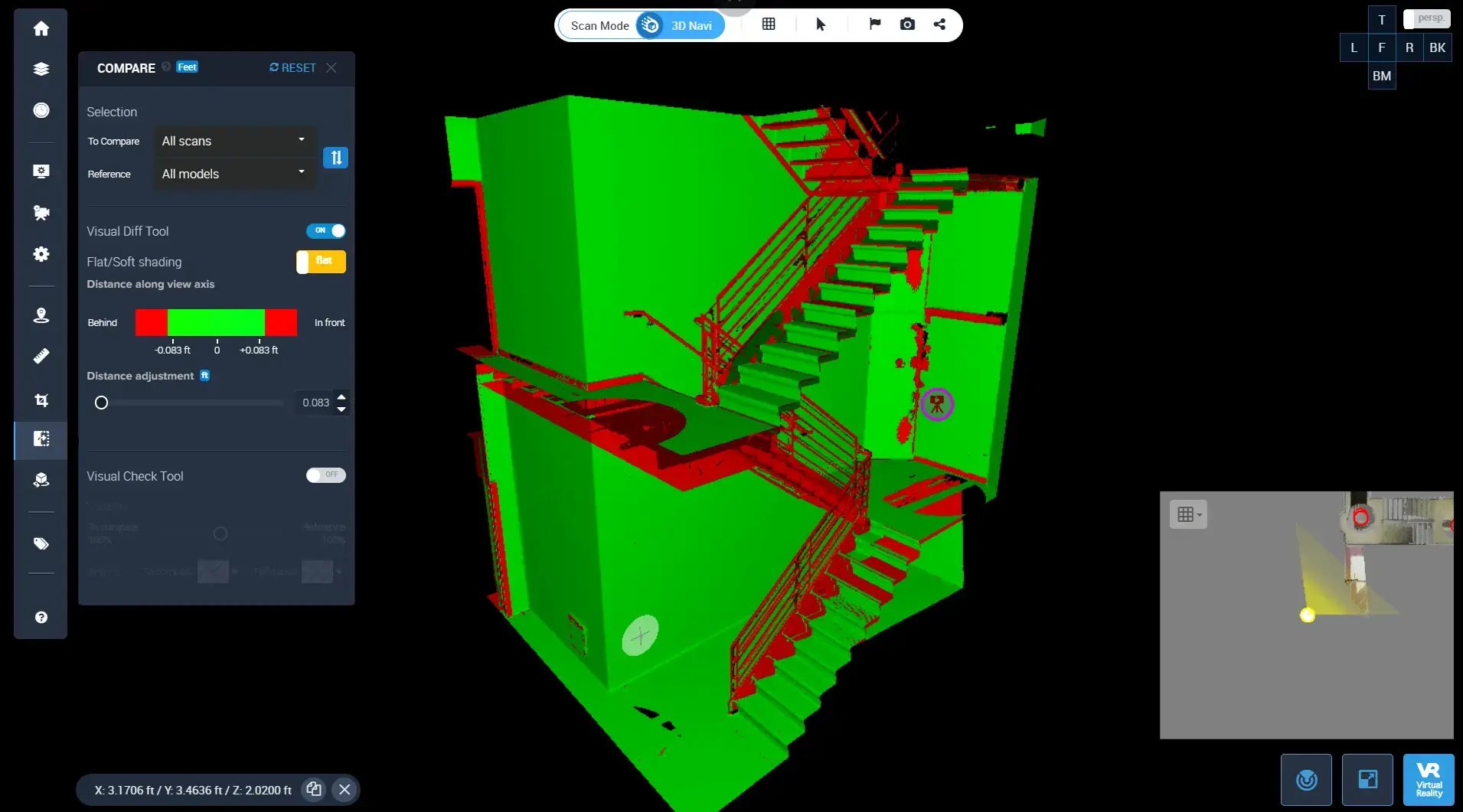
Being able to access data in the cloud reduces the time between capturing site conditions and acting on them. Instead of waiting for data to be processed, transferred, and distributed, stakeholders can view current site reality on demand and compare it directly against design intent. Scan-vs-BIM workflows let teams flag deviations, verify installations, and resolve issues before they become costly rework, shortening previously lengthy decision cycles.
3. Scalable collaboration across distributed teams
Enterprise AEC work is inherently distributed across disciplines, offices, time zones and supply chains. Browser-based access means as-built data can be shared with a link, without shipping drives or granting access to specialized software. This lowers the barrier to collaboration and lets larger, more geographically dispersed teams contribute without the traditional overhead.
4. Lower total cost of ownership
Centralizing reality data in the cloud reduces the hidden costs of on-premise storage, such as redundant hardware, duplicated datasets, IT maintenance, and the labor of moving files between teams. It also reduces travel and site revisits, since stakeholders can inspect conditions remotely. For enterprises running dozens of concurrent projects, these efficiencies compound significantly.
5. A foundation for digital twins and long-term asset value
A further strategic benefit is cloud-based reality data becoming the foundation of an accurate digital twin. By integrating with BIM coordination tools, document management systems, IoT platforms, and asset-tagging workflows, reality data extends beyond construction into operations and maintenance. The as-built captured today becomes the operationl knowledge base for the asset's entire lifecycle, supporting facility management, retrofits, and future capital projects long after handover.
6. Unified multimodal data
Modern enterprise sites are captured with a mix of hardware, including static scanners for precision, mobile scanners for speed, drones for exteriors, and 360 cameras for rapid documentation. A cloud platform that ingests and unifies these multiple data types lets organizations standardize workflows across their entire portfolio rather than managing incompatible datasets tool-by-tool.
From project delivery to operational strategy
For enterprise leaders, the real shift is conceptual. Cloud digitalization moves reality capture from a project-level task, something done once for a specific deliverable, to an operational asset that generates value continuously.
When as-built data is centralized, accessible and connected to your BIM, digital twins, and asset management ecosystems, it stops being a cost center and becomes strategic infrastructure.
Getting started
The most successful enterprise digitalization strategies start with the data layer. Establishing a single, cloud-based source of truth for reality capture that can scale across projects and integrate with the tools your teams already use. From there, the value grows into faster decisions, tighter collaboration, lower costs, and digital twins that serve the full asset lifecycle.
Platforms like Cintoo are purpose-built for this, bridging the gap between reality capture and digital twins so enterprise organizations can put their as-built data to work at scale.
Frequently asked questions
What is cloud digitalization in AEC?
It means moving project and asset data, especially reality capture data like laser scans, into a centralized cloud platform, where it can be stored, streamed, compared to design models and shared across teams without heavy local hardware.
How does cloud reality capture improve enterprise operations?
It creates a single source of truth for as-built conditions, speeds up decision-making through on-demand access and scan-vs-BIM comparison, enables distributed collaboration via the browser, reduces storage and travel costs, and provides the data foundation for digital twins.
How does cloud data support digital twins?
Cloud-based reality data can be connected to BIM, IoT, document management, and asset-tagging systems, turning a point-in-time scan into a living digital twin that supports operations and maintenance across the asset's lifecycle.
Do teams need specialized software or hardware to access cloud reality data?
No, platforms like Cintoo stream mesh-based reality data through a standard web browser so stakeholders can view and interrogate large datasets without high-end workstations or specialist local installs.
Ready to digitalize your operations?
Your as-built data is one of your most valuable assets. See how Cintoo helps enterprise organizations centralize reality capture data in the cloud, accelerate decisions, and build the foundation for digital twins at scale.



.png?width=48&height=48&name=sensors%20(1).png)
.png?width=65&height=50&name=sensors%20(2).png)


.png?width=69&height=50&name=cloud_done%20(1).png)


.png?width=42&height=49&name=Group%2015496%20(2).png)


.png?width=60&height=60&name=calendar%20(1).png)


.png?width=48&height=45&name=image%20175%20(1).png)