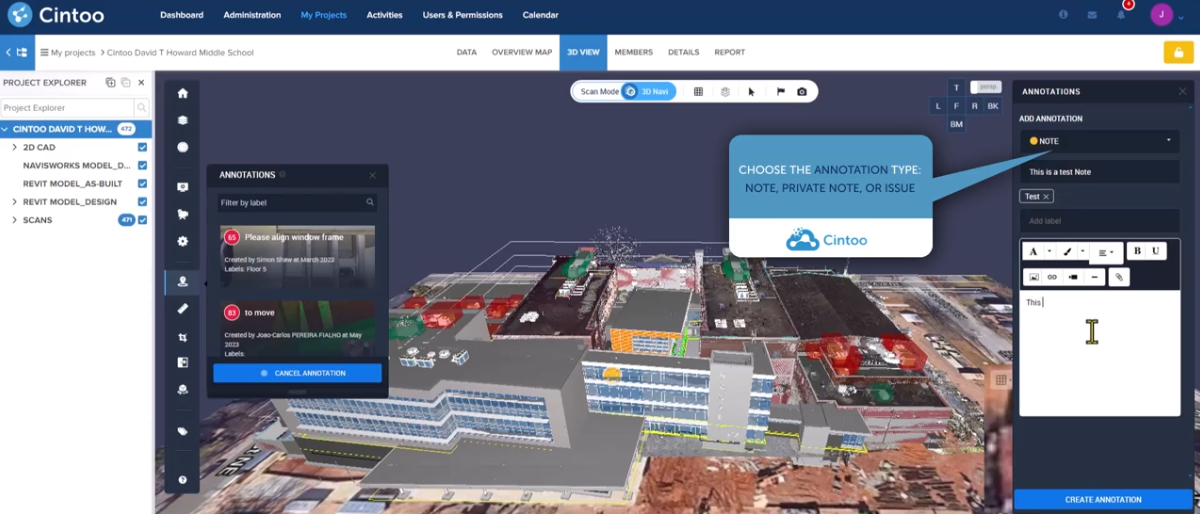
On the United Airlines Concourse A‑West Baggage Handling System (BHS) project at Denver International Airport, Gilmore Construction implemented a modern, scan‑based quality management workflow to address the project’s scale, density, and tight tolerances. By combining Cintoo’s scan‑to‑model validation with Procore’s Observations and issue‑tracking tools, Gilmore created a seamless process for identifying installation discrepancies, communicating issues to trade partners, and verifying corrective action in the field. This integrated approach improved QA/QC accuracy, reduced rework risk, and strengthened accountability across the project team.
Project Background
The UAL Concourse A‑West BHS project spans approximately 225,000 square feet and includes two major phases—relocations and new baggage handling system installation—running from August 2024 through May 2027. The work involves heavy MEP coordination in active airport spaces, with strict clearance requirements around conveyors and catwalks.
Given the volume of existing overhead systems and the density of new installations, Gilmore recognized that traditional QA/QC methods, Navisworks coordination and manual field walkthroughs alone, would not reliably catch misalignments early enough.
The QA/QC Challenge
Gilmore faced several interrelated challenges:
- High volumes of existing ductwork, cable tray, electrical, plumbing, and fire protection requiring relocation
- Tight BHS tolerances, including 36-inch conveyor clearances and 80-inch catwalk headroom
- Limited access windows in an operational airport
- Significant downstream risk if issues were discovered after systems were installed or energized
The project demanded an efficient way to compare installed conditions against the coordinated BIM model, validate BHS clearances, and communicate issues clearly and quickly to trade partners.
Cintoo as the Scan‑to‑Model QA/QC Engine
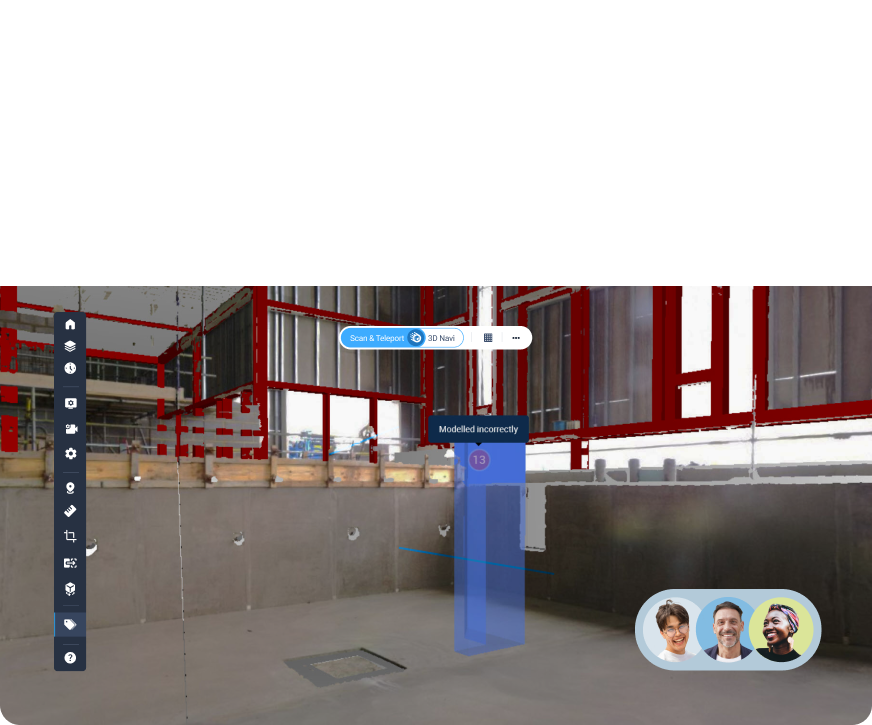
To meet these demands, Gilmore selected Cintoo as the foundation of its scan‑to‑model QA/QC workflow. Cintoo’s cloud‑based platform allowed the team to align laser scans with coordinated BIM models, isolate specific areas using sectioning tools and crop boxes, and perform quality checks directly in a web browser, both in the office and the field.
Gilmore’s standardized workflow included:
- Scan and setup: Field scans were uploaded to Cintoo as .e57 files and aligned to BIM using reference background models. Scans were organized by zones such as 10W, 9W, and 8W.
- QC and validation: Point clouds were overlaid with discipline‑specific models to identify variances, mis‑installs, or clearance conflicts.
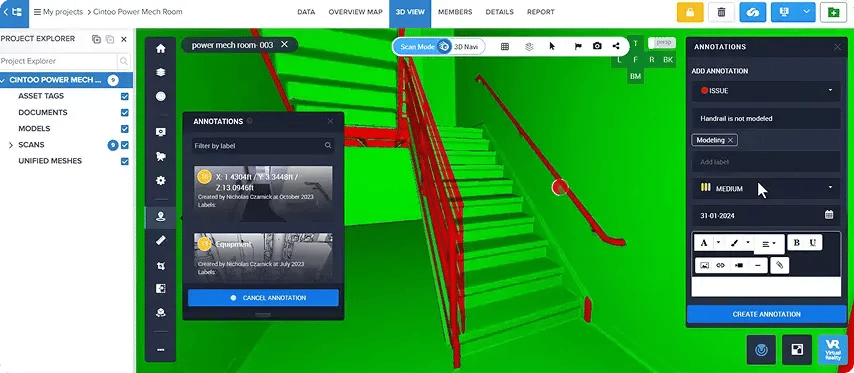
- Field action and closeout: Issues identified in Cintoo were pushed directly into Procore as Observations for trade partner action.
This scan‑based approach made QA/QC proactive rather than reactive.
Procore as the System of Record for Issue Management
While Cintoo enabled precise detection of field issues, Procore served as the system of record for communication, accountability, and resolution. Cintoo issues were linked directly to Procore’s Observation tools, ensuring that discrepancies identified during scan‑to‑model reviews were immediately visible to the appropriate trade partners.
Within Procore, Gilmore standardized expectations:
- Trade partners were typically given five working days to complete corrective field work
- Fifteen working days were allotted for updating as‑built models following corrections
- This clear structure improved response times and eliminated ambiguity around ownership and status.
Real‑World QA/QC Results
The integrated Cintoo–Procore workflow delivered measurable benefits across multiple trades:
Mechanical ductwork: Scan‑to‑model comparisons revealed ductwork deviations that conflicted with planned BHS header steel. The issue was pushed to Procore, and the mechanical trade corrected the installation before steel installation was impacted.
Cable tray: Misaligned cable tray affecting catwalk head clearance and BHS hard clearances was identified early. Procore Observations ensured corrective action occurred before fiber installation, avoiding costly rework.
Fire protection: Numerous fire protection branch lines requiring relocation were documented through Cintoo and tracked to completion in Procore before final sign‑off.
Across all examples, the combination of visual scan data and structured Procore workflows improved clarity, speed, and accountability.
Weekly, Repeatable QA/QC at Scale
Gilmore implemented weekly BIM and scan‑based QC cycles, allowing the team to continuously validate installed conditions against the coordinated model as construction progressed. This repeatable process helped the team manage the project’s scale and complexity while maintaining confidence that installations met design and clearance requirements.



.png?width=48&height=48&name=sensors%20(1).png)
.png?width=65&height=50&name=sensors%20(2).png)


.png?width=69&height=50&name=cloud_done%20(1).png)


.png?width=42&height=49&name=Group%2015496%20(2).png)


.png?width=60&height=60&name=calendar%20(1).png)


.png?width=48&height=45&name=image%20175%20(1).png)